Digital Prayer vs In-Person Prayer: What Works Best?
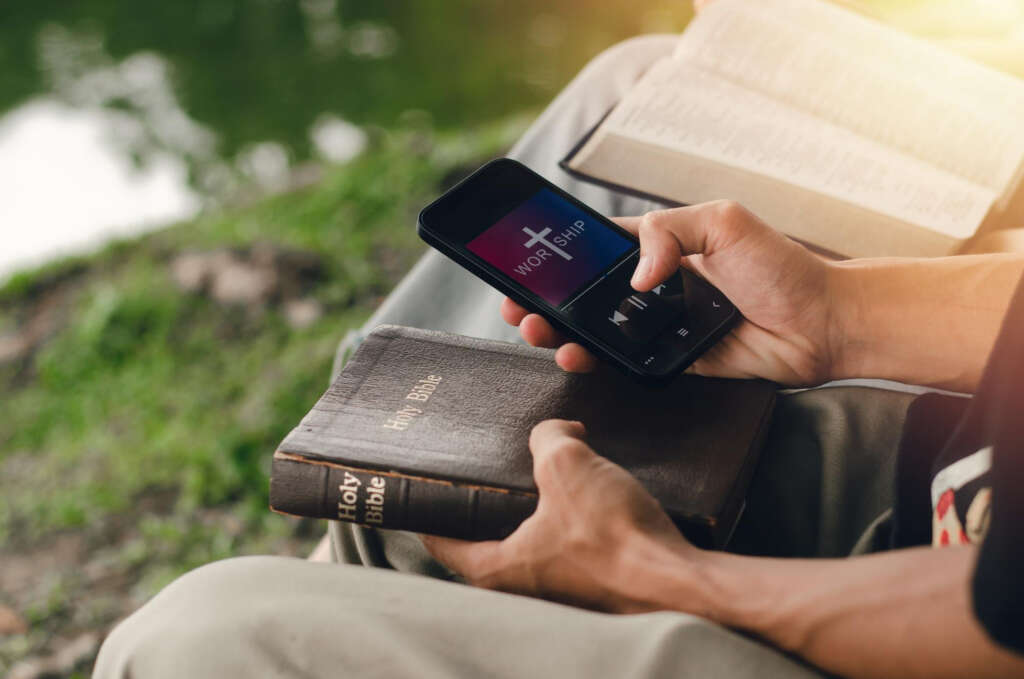
The debate has quietly emerged in faith communities around the world: Is praying through a screen as meaningful as praying in person? It’s a question worth exploring honestly – without dismissing either tradition or technology. Because the truth is, the most spiritually grounded people today aren’t choosing one over the other. They’re learning how to hold both. The Power of In-Person Prayer There is something irreplaceable about gathering in a physical space to pray. When a community kneels together, stands shoulder to shoulder, or circles in a room lit by candles, something happens that words struggle to capture. The air feels different. The shared breath of a hundred people all reaching toward the same thing creates a tangible sense of the sacred. What in-person prayer offers: Physical presence and embodiment. Our bodies matter in prayer. The act of bowing, kneeling, raising hands, or prostrating connects our spiritual intention to our physical experience in a way that screens cannot replicate. Ritual and tradition. In-person worship often follows sacred rituals passed down across centuries. These rituals carry the weight of history – and that weight is spiritually nourishing. Undivided attention. Walking into a church, mosque, or temple requires intentional presence. You leave your ordinary life at the door. That transition matters. Pastoral support. In-person faith communities provide human care – a pastor who notices when you’re struggling, an elder who prays with you personally, a friend who sits beside you in grief. These gifts are real. They are not easily replicated by technology. The Power of Digital Prayer And yet – the world has changed. Work schedules are unpredictable. Families are geographically scattered. Health challenges keep people at home. Mental health struggles make it difficult to attend communal gatherings. And for many, organized religion has felt unwelcoming or inaccessible. Digital prayer has stepped into that space – not as a replacement, but as a lifeline. What digital prayer offers: Accessibility. You can pray from a hospital bed, a night shift break room, a foreign country, or a lonely apartment at 3am. Faith is no longer limited by geography or circumstance. Consistency tools. Digital platforms provide reminders, streaks, accountability systems, and habit-building features that help people pray more regularly – even on difficult days. Global community. Digital prayer connects you with people across languages, cultures, and traditions who are praying for the same things you are. The scale of that solidarity is unlike anything in-person communities can offer. Anonymity and safety. For people who are spiritually curious but not ready to walk into a faith building – or those from marginalized groups – digital platforms offer a safe, judgment-free space to explore prayer. How Devotion Coin Bridges the Gap Devotion Coin was designed precisely for this moment – when the world needs faith but doesn’t always have access to its traditional forms. It’s a faith-based digital platform that honors prayer as a sacred act, regardless of where or how it happens. Through its app and wearable integrations, it allows users to pray in any language, from any tradition, at any time. The Live Prayer Ticker Devotion Coin’s Live Prayer Ticker shows prayers being offered around the world in real time. When you see dozens of prayers flowing across your screen – from Lagos, Manila, São Paulo, and Oslo – something shifts inside you. You are no longer praying alone. You are part of a global chorus. That’s a form of spiritual community that no single in-person congregation can provide. The Vault System Every prayer offered for the greater good flows into a shared Vault – organized by intention: Healing, Peace, Guidance, Goodwill, Youth, Unity. You can watch these Vaults grow over time, filled with the accumulated prayers of thousands of people who share your hopes for the world. There is something deeply moving about that. It transforms individual prayer into collective spiritual force. The Tri-Mint System Every completed prayer generates three outcomes: one for the person requesting, one for the person praying, and one for the shared Vault. No prayer is wasted. No prayer is invisible. Every act of devotion is recorded and honored. What Does the Research Suggest? While research on digital prayer specifically is still emerging, the evidence on prayer in general is substantial. Regular prayer – in any form – is associated with reduced anxiety, greater resilience, increased empathy, and a stronger sense of meaning and purpose. The medium appears to matter less than the intention and consistency behind it. What this suggests is that the best prayer practice is the one you can sustain – and that it doesn’t have to be either digital or in-person. It can, and perhaps should, be both. A New Model: Integrated Spiritual Practice The most spiritually grounded people today are not purists. They attend worship when they can and pray through apps when they can’t. They participate in local faith communities and connect with global ones. They value tradition and embrace the tools that help them live it more fully. Devotion Coin fits naturally into this integrated model. It isn’t asking you to leave your church, your mosque, your temple, or your prayer circle. It’s asking you to carry your faith with you – into the digital world, into your daily routine, into every moment when you reach toward something greater. The Question Isn’t Digital vs. In-Person The real question is not which kind of prayer is better. The real question is: Are you praying at all? If digital tools help more people pray more consistently – with more connection, more community, and more compassion – then they are not the enemy of faith. They are its ally. Devotion Coin was built on that conviction. And every prayer offered through it – no matter how small, no matter what language, no matter what tradition – is proof that faith finds a way. FAQs: Q: Is digital prayer as effective as in-person prayer? A: Research suggests that the intention and consistency behind prayer matter more than the medium. Digital prayer can be just