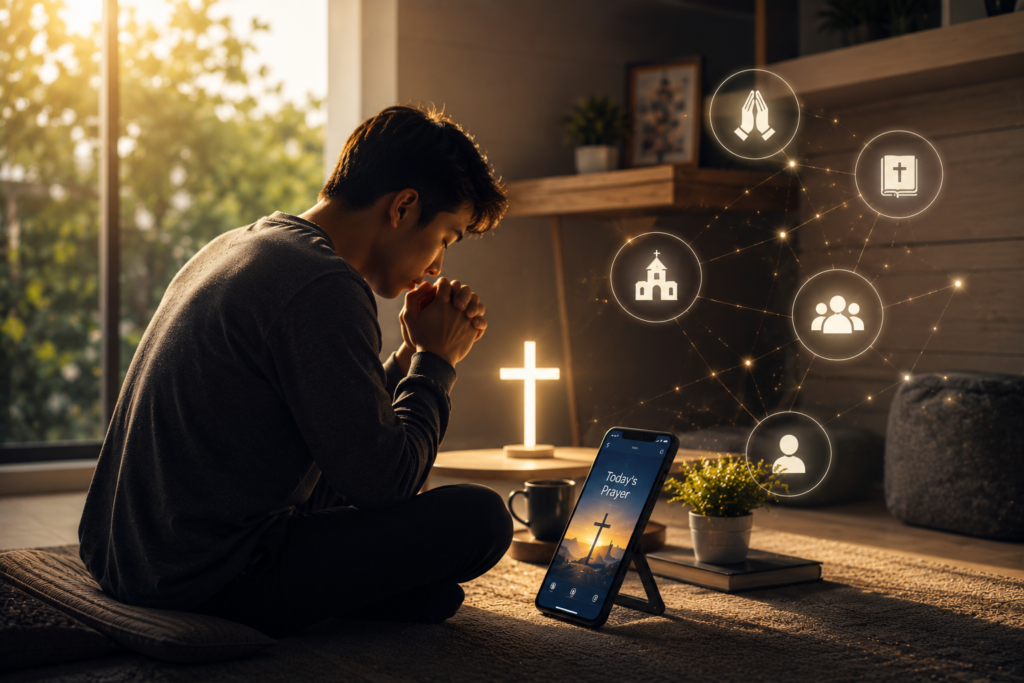
Many Christians today are asking whether digital prayer is replacing traditional prayer methods. As technology becomes part of everyday life, more believers are using prayer apps, online devotion platforms, and virtual faith communities to stay spiritually connected. This shift matters because prayer is deeply personal, and many people wonder if digital experiences can truly provide the same spiritual depth, peace, and connection as traditional prayer practices.
Understanding Digital Prayer and Traditional Prayer
Digital prayer refers to prayer experiences supported through technology. This can include prayer apps, livestream worship, online Bible studies, virtual prayer groups, and digital devotion platforms.
Traditional prayer methods usually involve in-person worship, private prayer time, church gatherings, and face-to-face spiritual fellowship.
What Is Digital Prayer?
Digital prayer allows believers to engage in spiritual practices through mobile devices, websites, and online communities. Many Christians use these tools for:
- Daily prayer reminders
- Scripture reflection
- Virtual prayer circles
- Guided devotionals
- Worship content on demand
Digital prayer creates flexibility for people balancing busy modern schedules.
Are Traditional Prayer Methods Still Important?
Yes. Traditional prayer methods remain deeply meaningful for many believers because they provide physical community, shared worship experiences, and uninterrupted spiritual focus.
Church gatherings, family prayers, and quiet personal devotion continue to play an important role in Christian life.
Why Modern Life Is Changing Prayer Habits
Technology has transformed how people communicate, work, and build relationships. Faith practices are evolving as Christians search for ways to stay spiritually connected amid stress, distractions, and demanding routines.
Many people are not abandoning traditional prayer. Instead, they are blending digital and traditional approaches together.
The Impact of Busy Lifestyles
Long work hours, commuting, and constant notifications often make consistent prayer difficult. Digital devotion tools help believers create intentional spiritual moments throughout the day.
Examples include:
- Morning prayer reminders
- Audio scripture during commutes
- Evening online devotion sessions
- Virtual prayer support groups
These habits make prayer more accessible for modern believers.
Digital Prayer vs In-Person Worship
Digital prayer can support spiritual consistency, but many Christians still value in-person worship for emotional connection and community fellowship.
Both approaches can complement each other rather than compete.
For a deeper comparison, explore Digital Prayer vs In-Person Prayer: What Works Best?
How Devotion Coin Connects Blockchain and Faith
Devotion Coin offers a unique digital ecosystem designed to strengthen prayer, devotion, and Christian engagement through modern technology.
Unlike financial blockchain platforms, Devotion Coin focuses entirely on faith-centered connection and spiritual participation.
What Makes Devotion Coin Different?
Devotion Coin combines:
- Digital devotion experiences
- Community-centered prayer engagement
- Faith-focused technology
- Blockchain-supported spiritual interaction
Its purpose is helping believers stay spiritually connected in the digital age.
How Does Blockchain Support Digital Devotion?
Blockchain technology can create secure and transparent digital environments for faith participation and community engagement. This supports trust, consistency, and accessibility within digital prayer experiences.
The focus remains on spiritual connection, not financial activity.
To understand this concept better, read What Is a Digital Prayer Platform & How Does It Work?
Finding Balance Between Digital and Traditional Prayer
The question is not whether digital prayer is replacing traditional prayer methods entirely. Instead, many believers are learning how to balance both forms of spiritual practice.
Practical Ways Christians Combine Both
Many people now:
- Attend church weekly
- Use prayer apps daily
- Join online devotion groups
- Pray privately at home
- Participate in virtual Bible studies
This blended approach allows faith to remain part of daily life even during busy seasons.
Why Community Still Matters
Prayer is often stronger within supportive communities. Whether online or in person, believers benefit from shared encouragement, accountability, and spiritual connection.
Digital platforms can help people who:
- Travel frequently
- Work irregular schedules
- Feel isolated
- Live far from church communities
- Need flexible spiritual support
Technology becomes most meaningful when it strengthens human connection rather than replacing it.
The Future of AI, Blockchain, and Prayer
Faith and technology will likely continue evolving together. AI-powered devotion tools, digital worship spaces, and blockchain-supported faith ecosystems may shape future spiritual experiences.
However, the heart of prayer will remain deeply personal and centered on connection with God.
How AI May Influence Faith Practices
Future faith technology could include:
- Personalized devotional guidance
- AI-assisted scripture recommendations
- Global prayer communities
- Interactive spiritual learning
- More accessible faith support
These innovations may help believers maintain stronger daily prayer habits.
Will Traditional Prayer Disappear?
Traditional prayer methods are unlikely to disappear because many Christians value physical fellowship, church worship, and quiet reflection away from screens.
Instead, digital prayer may continue serving as a supportive extension of traditional faith practices.
FAQs
Q: Is digital prayer replacing traditional prayer?
A: Not completely. Many Christians use digital prayer tools alongside traditional worship and personal prayer routines.
Q: What is digital prayer?
A: Digital prayer includes online devotion platforms, prayer apps, virtual worship, and technology-supported spiritual practices.
Q: Can digital prayer strengthen faith?
A: Yes. Digital prayer tools can help believers stay consistent with prayer, scripture reading, and spiritual connection throughout daily life.